Contend Earnestly

Friday, January 05, 2007

Are Homosexuals "Born that Way?"


Tyrone asked a very good question, "Are homosexuals born homosexuals, or are they born into sin, like all of us, with this specific sin being their "vice?" I have gone back and forth in my own mind over the past couple of years with this issue. First, I thought, of course they weren't born that way, there is no way! Then again, I had no Scripture to point to. So, then I thought: Are we not all born into sin, some of us prideful, some of us lustful, some of us greedy, some of us, etc. etc. etc. So couldn't some of us just be born gay? This doesn't say that being gay is not a sin, for it still does, and still says that those who are gay, prideful, lustful, greedy, and the such still are commanded to repent and turn to Christ. But then I found the clincher that changed my mind once again.

Romans 1:27


and in the same way also the men abandoned the natural function of the woman and burned in their desire toward one another, men with men committing indecent acts and receiving in their own persons the due penalty of their error.

The word for "natural" means in the Greek "inborn" or "produced by nature." This means that those that are gay are going against what they were inborn with: heterosexuality. If you look even further into Greek literature, Aristotle and the such, they also used this exact word for "the way nature intended" when using this word in their writings. I am not saying that they were writing about homosexuality, but they used the words when pertaining to the way "things were meant to be by nature." So, I have gone back to my roots, with Scripture this time, knowing that the homosexual is NOT born a homosexual. They are however, like us all, born into sin. They might have different struggles than we do in this particular sin, but they were not specifically born as a homosexual.

Read More......

Thursday, January 04, 2007

Around the Web


Fide-O discusses church membership

Theology Online "debating" on baptism and a little on covenants

Calvinist Gadfly having an interesting time with some songs

Dan Philips has an interesting post over on Team Pyro


Read More......

Is Homosexuality a Sin?

I have been having a dialogue with someone who emailed me and asked if I felt that homosexuality is a sin. As we have dialogued through email the discussion turned into more of a heated debate. I am saddened when I see this happen but am not surprised when we are speaking of such a "hot" topic these days and also trying to defend it with the most absolute and closed-minded source: the Bible.

Is not My word like fire?” declares the Lord, “and like a hammer which shatters a rock?
Jeremiah 23:29


When we take a look at homosexuality we must see what God says to the issue and then we will take a look at what this person has tried to refute me with.

The first and obvious Scripture lies in these verses:

You shall not lie with a male as one lies with a female; it is an abomination.
Leviticus 18:22

If there is a man who lies with a male as those who lie with a woman, both of them have committed a detestable act
Leviticus 20:13


To these the man replied, "this is the law of the Old Testament and has no barring for us in the New"

Without going into a complete defense of this I just remarked simply, "In Leviticus 18:23 it tells us not to mate with animals, is this now appropriate for Christians to do?" Simply put, no answer on this one from him.

I then went to the New Testament and showed Romans 1:26,27

For this reason God gave them over to degrading passions; for their women exchanged the natural function for that which is unnatural, and in the same way also the men abandoned the natural function of the woman and burned in their desire toward one another, men with men committing indecent acts and receiving in their own persons the due penalty of their error.

This obviously points to not only the lust but also the carrying out of that lust to the "indecent act."

He tried to then say, "this is saying that it is unnatural for a heterosexual to have lust for another man but it is okay for a homosexual to have that same lust."

The interesting point to also make is that when we see the word "men with men" in verse 27, this is a Greek term meaning, "abuser of (one’s) self with mankind, a sodomite" So if anything, this isnt' even speaking to a heterosexual because a heterosexual will not have these lusts or these acts that are both called improper and improper.

The same term for "men with men" is used both in 1 Cor 6:9 and also 1 Timothy 1:10, and they both point to that the homosexuals will not inherit the kingdom of God.

I will stress this, if you have read this far, I do not "focus" my time on this issue, nor do I put it above other sins as more vital or less vital, but trust the word of the Lord that says:

For whoever keeps the whole law and yet stumbles in one point, he
has become guilty of all.
James 2:10


The finality of my email to him was that the burden of proof lies on him. God never speaks of homosexuality in any sort of good whatsoever, and actually sends down fire from heaven to destroy a city because of it.

To put some kindling on the fire I also had to refute his idea that David and Jonathan had a love relationship with one another that extended past friendship.

May we all hold to Scripture alone and His glory alone.

Read More......

Wednesday, January 03, 2007

Luther's 97 Theses: Disputation Against Scholastic Theology


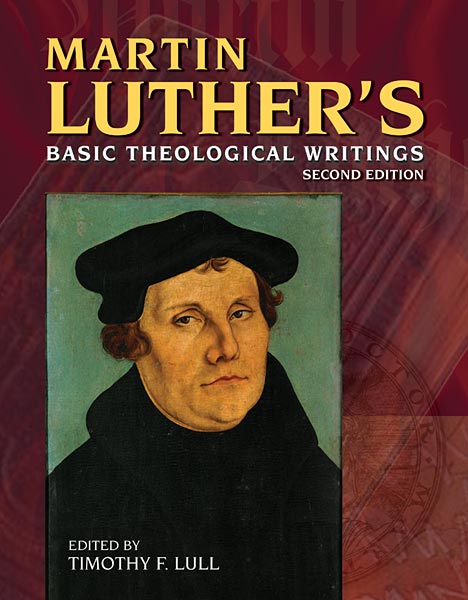
I have taken this from the book: Martin Luther's Basic Theological Writings edited by Timothy F. Lull


In this crucial document from the early fall of 1517, Luther offers a number of theses for debate that are sharply critical of the currently reigning method of scholastic theology, with its high confidence in human reason and free will. The philosophical dependence of theology on Aristotle, going back two hundred and fifty years to St. Thomas Aquinas, may initially have been a creative and worthwhile experiment. But now as Luther views the scholastic theology of his own time, this approach has blunted the distinctiveness of the gospel.
The reader may well find the thesis-form forbidding and find some of the issues that Luther is addressing difficult to understand. These theses were written for a student to defend in an academic exercise at the University of Wittenberg and therefore were designed only to provide initial clues about these positions. Their very pointed, exaggerated nature is part of the intellectual challenge of the disputation for those who must develop and defend them.
But the reader who perseveres will find in them many of the major themes of Luther’s own theology as they had been emerging in his biblical lectures of the preceding years. One can at least see that Luther already had strong convictions on a number of issues, especially the relations between sin, grace, free will, and good works, even before the debate about indulgences began.
Luther’s language is sharp, but his official posture is still deferential. He concludes the attack on scholastic theology with the claim that we believe we have said nothing that is not in agreement with the Catholic church and the teachers of the church. But within weeks Luther had launched a debate about the selling of indulgences that brought him and his theology to the attention of the highest church authorities.

Translated by Harold J. Grimm

1. To say that Augustine exaggerates in speaking against heretics is to say that Augustine tells lies almost everywhere. This is contrary to common knowledge.
2. This is the same as permitting Pelagians1 and all heretics to triumph, indeed, the same as conceding victory to them.
3. It is the same as making sport of the authority of all doctors of theology.
4. It is therefore true that man, being a bad tree, can only will and do evil [Cf. Matt. 7:17–18].
5. It is false to state that man’s inclination is free to choose between either of two opposites. Indeed, the inclination is not free, but captive. Tiffs is said in opposition to common opinion.

6. It is false to state that the will can by nature conform to correct precept. This is said in opposition to Scotus2 and Gabriel.3
7. As a matter of fact, without the grace of God the will produces an act that is perverse and evil.
8. It does not, however, follow that the will is by nature evil, that is, essentially evil, as the Manichaeans4 maintain.
9. It is nevertheless innately and inevitably evil and corrupt.
10. One must concede that the will is not free to strive toward whatever is declared good. This in opposition to Scotus and Gabriel.
11. Nor is it able to will or not to will whatever is prescribed.
12. Nor does one contradict St. Augustine when one says that nothing is so much in the power of the will as the will itself.
13. It is absurd to conclude that erring man can love the creature above all things, therefore also God. This in opposition to Scotus and Gabriel.
14. Nor is it surprising that the will can conform to erroneous and not to correct precept.
15. Indeed, it is peculiar to it that it can only conform to erroneous and not to correct precept.
16. One ought rather to conclude: since erring man is able to love the creature it is impossible for him to love God.
17. Man is by nature unable to want God to be God. Indeed, he himself wants to be God, and does not want God to be God.
18. To love God above all things by nature is a fictitious term, a chimera, as it were. This is contrary to common teaching.
19. Nor can we apply the reasoning of Scotus concerning the brave citizen who loves his country more than himself.
20. An act of friendship is done, not according to nature, but according to prevenient grace. This in opposition to Gabriel.
21. No act is done according to nature that is not an act of concupiscence against God.
22. Every act of concupiscence against God is evil and a fornication of the spirit.
23. Nor is it true that an act of concupiscence can be set aright by the virtue of hope. This in opposition to Gabriel.
24. For hope is not contrary to charity, which seeks and desires only that which is of God.
25. Hope does not grow out of merits, but out of suffering which destroys merits. This in opposition to the opinion of many.
26. An act of friendship is not the most perfect means for accomplishing that which is in one.5 Nor is it the most perfect means for obtaining the grace of God or turning toward and approaching God.
27. But it is an act of conversion already perfected, following grace both in time and by nature.
28. If it is said of the Scripture passages, “Return to me,…and I will return to you” [Zech. 1:3.], “Draw near to God and he will draw near to you” [Jas. 4:8], “Seek and you will find” [Matt. 7:7], “You will seek me and find me” [Jer. 29:13], and the like, that one is by nature, the other by grace, this is no different from asserting what the Pelagians have said.
29. The best and infallible preparation for grace and the sole disposition toward grace is the eternal election and predestination of God.
30. On the part of man, however, nothing precedes grace except indisposition and even rebellion against grace.
31. It is said with the idlest demonstrations that the predestined can be damned individually but not collectively. This in opposition to the scholastics.
32. Moreover, nothing is achieved by the following saying: Predestination is necessary by virtue of the consequence of God’s willing, but not of what actually followed, namely, that God had to elect a certain person.
33. And this is false, that doing all that one is able to do can remove the obstacles to grace. This in opposition to several authorities.
34. In brief, man by nature has neither correct precept nor good will.
35. It is not true that an invincible ignorance excuses one completely (all scholastics notwithstanding);
36. For ignorance of God and oneself and good work is always invincible to nature.
37. Nature, moreover, inwardly and necessarily glories and takes pride in every work which is apparently and outwardly good.
38. There is no moral virtue without either pride or sorrow, that is, without sin.
39. We are not masters of our actions, from beginning to end, but servants. This in opposition to the philosophers.
40. We do not become righteous by doing righteous deeds but, having been made righteous, we do righteous deeds. This in opposition to the philosophers.
41. Virtually the entire Ethics of Aristotle is the worst enemy of grace. This in opposition to the scholastics.
42. It is an error to maintain that Aristotle’s statement concerning happiness does not contradict Catholic doctrine. This in opposition to the doctrine on morals.
43. It is an error to say that no man can become a theologian without Aristotle. This in opposition to common opinion.
44. Indeed, no one can become a theologian unless he becomes one without Aristotle.
45. To state that a theologian who is not a logician is a monstrous heretic—this is a monstrous and heretical statement. This in opposition to common opinion.
46. In vain does one fashion a logic of faith, a substitution brought about without regard for limit and measure. This in opposition to the new dialecticians.
47. No syllogistic form is valid when applied to divine terms. This in opposition to the Cardinal.6
48. Nevertheless it does not for that reason follow that the truth of the doctrine of the Trinity contradicts syllogistic forms. This in opposition to the same new dialecticians and to the Cardinal.
49. If a syllogistic form of reasoning holds in divine matters, then the doctrine of the Trinity is demonstrable and not the object of faith.
50. Briefly, the whole Aristotle7 is to theology as darkness is to light. This in opposition to the scholastics.
51. It is very doubtful whether the Latins comprehended the correct meaning of Aristotle.
52. It would have been better for the church if Porphyry8 with his universals had not been born for the use of theologians.
53. Even the more useful definitions of Aristotle seem to beg the question.
54. For an act to be meritorious, either the presence of grace is sufficient, or its presence means nothing. This in opposition to Gabriel.
55. The grace of God is never present in such a way that it is inactive, but it is a living, active, and operative spirit; nor can it happen that through the absolute power of God an act of friendship may be present without the presence of the grace of God. This in opposition to Gabriel.
56. It is not true that God can accept man without his justifying grace. This in opposition to Ockham.9
57. It is dangerous to say that the law commands that an act of obeying the commandment be done in the grace of God. This in opposition to the Cardinal and Gabriel.
58. From this it would follow that “to have the grace of God” is actually a new demand going beyond the law.
59. It would also follow that fulfilling the law can take place without the grace of God.
60. Likewise it follows that the grace of God would be more hateful than the law itself.
61. It does not follow that the law should be complied with and fulfilled in the grace of God. This in opposition to Gabriel.
62. And that therefore he who is outside the grace of God sins incessantly, even when he does not kill, commit adultery, or become angry.
63. But it follows that he sins because he does not spiritually fulfill the law.
64. Spiritually that person does not kill, does not do evil, does not become enraged when he neither becomes angry nor lusts.
65. Outside the grace of God it is indeed impossible not to become angry or lust, so that not even in grace is it possible to fulfill the law perfectly.
66. It is the righteousness of the hypocrite actually and outwardly not to kill, do evil, etc.
67. It is by the grace of God that one does not lust or become enraged.
68. Therefore it is impossible to fulfill the law in any way without the grace of God.
69. As a matter of fact, it is more accurate to say that the law is destroyed by nature without the grace of God.
70. A good law will of necessity be bad for the natural will.
71. Law and will are two implacable foes without the grace of God.
72. What the law wants, the will never wants, unless it pretends to want it out of fear or love.
73. The law, as taskmaster of the will, will not be overcome except by the “child, who has been born to us” [Isa. 9:6].
74. The law makes sin abound because it irritates and repels the will [Rom. 7:13].
75. The grace of God, however, makes justice abound through Jesus Christ because it causes one to be pleased with the law.
76. Every deed of the law without the grace of God appears good outwardly, but inwardly it is sin. This in opposition to the scholastics.
77. The will is always averse to, and the hands inclined toward, the law of the Lord without the grace of God.
78. The will which is inclined toward the law without the grace of God is so inclined by reason of its own advantage.
79. Condemned are all those who do the works of the law.
80. Blessed are all those who do the works of the grace of God.
81. Chapter Falsas concerning penance, dist. 5, 10 confirms the fact that works outside the realm of grace are not good, if this is not understood falsely.
82. Not only are the religious ceremonials not the good law and the precepts in which one does not live (in opposition to many teachers);
83. But even the Decalogue itself and all that can be taught and prescribed inwardly and outwardly is not good law either.
84. The good law and that in which one lives is the love of God, spread abroad in our hearts by the Holy Spirit.
85. Anyone’s will would prefer, if it were possible, that there would be no law and to be entirely free.
86. Anyone’s will hates it that the law should be imposed upon it; if, however, the will desires imposition of the law it does so out of love of self.
87. Since the law is good, the will, which is hostile to it, cannot be good.
88. And from this it is clear that everyone’s natural will is iniquitous and bad.
89. Grace as a mediator is necessary to reconcile the law with the will.
90. The grace of God is given for the purpose of directing the will, lest it err even in loving God. In opposition to Gabriel.
91. It is not given so that good deeds might be induced more frequently and readily, but because without it no act of love is performed. In opposition to Gabriel.
92. It cannot be denied that love is superfluous if man is by nature able to do an act of friendship. In opposition to Gabriel.
93. There is a kind of subtle evil in the argument that an act is at the same time the fruit and the use of the fruit. In opposition to Ockham, the Cardinal, Gabriel.
94. This holds true also of the saying that the love of God may continue alongside an intense love of the creature.
95. To love God is at the same time to hate oneself and to know nothing but God.
96. We must make our will conform in every respect to the will of God (in opposition to the Cardinal);
97. So that we not only will what God wills, but also ought to will whatever God wills.
In these statements we wanted to say and believe we have said nothing that is not in agreement with the Catholic church and the teachers of the church.
1517

Editor, T. F. L., & Second Edition Editor, W. R. R. (2005; 2005). Martin Luther's Basic Theological Writings. Fortress Press.

Read More......

Saturday, December 30, 2006

Family Worship


A couple of weeks ago I read Donald Whitney's small pamphlet on Family Worship and have since then followed his advice on doing a nightly family time of worship. I have found this time to be of utmost importance and another thing that I have found from my Reformed friends as vital to the growth of our children. I keep harping that we need another reformation in the church and in our families and I really think this could be the key: Family Worship.

There is really a lot to be learned from doing a set aside time of worship and a lot to be gained. It first, establishes who is the spiritual head of the household, as the father or husband should be leading the time of worship. It has also brought up great discussion questions from my 3 year old learning from Proverbs. We have a time that is completely set aside to singing, reading from God's word, reading from the Valley of Vision, and then ending just as we started: prayer. This time has really helped and led right into something new that I am also doing with my son, and that is teaching him Spurgeon's Catechism, which should grow him for the future.

What better way to reform the church than at the home. Instead of the father and mother relying on the church to teach and to edify their children alone they start the learning at home where much can be gleaned.

I would highly recommend this little pamphlet that guides you through the thoughts of why it is important, biblically and also historically. Again, something that we can learn from the Prebyterians is this quote that I find very challenging and very "shepherding"


If the father failed (in not doing family worship), they were to be admonished
privately. And for any husband or father who continued to neglect his spiritual
responsibility to his family, The Directory of Family Worship gave these
instructions:

He is to be gravely and sadly reproved by the session
(that is, the elders); after which reproof, if he be found still to neglect
Family-worship, let him be, for his obstinacy in such an offence, suspended and
debarred from the Lord's supper, as being justly esteemed unworthy to
communicate therein, till he amend.

I found this to be a great show of caring for the flock from our Presbyterian brothers, putting the family first and the role of that time to fall squarely on the shoulders of the husband and/or father. How can we expect our churches to hold God in holy places if we don't first start in the home? How can we expect our families not to fall apart if they are not filled with God's Spirit? How can we expect our children to love God and to fear Him if we don't ourselves show that love and fear first in the home?

May we all put this time in our homes at the top of our list and do not do anything, even sleep until it is accomplished.

...as for me and my house we will serve the Lord...Joshua 24:15

Amen.

Read More......

Tuesday, December 26, 2006

Calvin vs Servetus


Thought this was a good small article on the execution of a heretic named Servetus, which has caused many to hate Calvin and to believe him to also be at fault as an heretic.

by J. Steven Wilkins

In the year 1553 an event occurred which would forever blacken the reputation of Calvin in the eyes of an ungodly world. In that year a heretic named Michael Servetus entered Geneva after fleeing from France after being condemned for his heresy there and escaping from prison in Vienna. He was seen in the streets of Geneva and arrested on August 13. This trouble he had brought upon himself by his book which denied the existence of the Trinity as well as the practice of infant baptism. Though the former is clearly a more serious error than the latter, the latter position identified Servetus with the hated Anabaptists who had spread the revolutionary ideas of socialism and communism. Why Servetus came to Geneva is not clear though the Reformer Wolfgang Musculus wrote that he apparently thought that Geneva might be favorable to him since there was so much opposition to Calvin.


On August 21, the authorities in Geneva wrote to Vienna asking further information on Servetus. The authorities in Vienna immediately demanded his extradition to face charges there. At this the Genevan city council offered Servetus a choice: he could either be returned to Vienna or stay in Geneva and face the charges against him. Servetus, significantly, chose to remain in Geneva.

The trial began and as it progressed, it became evident that the authorities had two choices: banish Servetus or execute him. They sent to their sister cities Berne, Zurich, Schaffhausen and Basle for their counsel. The counsel from each city was the same: execute the heretic. The method of burning alive was chosen. Calvin intervened to appeal for the more quick and merciful beheading as the method of execution but the council refused and on October 26, 1553, Michael Servetus was executed.

It is strange that this incident should bring such odium upon Calvin and another example of the hatred of orthodox Christianity that it has. The facts are that mass executions were carried out in other places throughout this time. After the Peasants' War in Germany, after the siege of Munster, during the ruthless period of Roman Catholic dominance in Elizabethan England. Even as late as 1612 the authorities in England burned two men who held views like those of Servetus at the behest of the bishops of London and Lichfield. Thirty-nine people were burned at the stake for heresy between May of 1547 and March of 1550. The 16th century was not a time of great tolerance of heresy in any place in Europe.

If one contends that Calvin was in error in agreeing with the execution of heretics then why is there not equal indignation against all the other leaders who supported and carried out and supported these measures elsewhere. None less than the honored Thomas Aquinas explicitly supported the burning of heretics saying, "If the heretic still remains pertinacious the church, despairing of his conversion, provides for the salvation of others by separating him from the church by the sentence of excommunication and then leaves him to the secular judge to be exterminated from the world by death." (Summa Theologiae, IIaIIae q. 11 a. 3)

Furthermore, Servetus was the only individual put to death for heresy in Geneva during Calvin's lifetime. Strange indignation it is that men focus upon this one and virtually ignore the hundreds executed in other parts of the world.

Further still, it must be remembered that Calvin's role in this entire matter was only that of expert witness at the trial. The idea that Calvin was "the dictator of Geneva" is utterly unfounded in fact. Calvin was never allowed to become a citizen of Geneva. He was technically among the habitants — resident legal aliens who had no right to vote, no right to carry weapons, and no right to hold public office. A habitant might be a pastor or teacher if there was no Genevan citizen who was qualified for the position. This is why Calvin was allowed to be pastor of the church there. But he was always denied access to the decision-making machinery.

The only place where Calvin could have exerted significant influence was in the Consistory. But the Consistory was completely bypassed in this entire matter by the council apparently in an effort to demonstrate that they were far more concerned for holiness and purity than Calvin (and some of the people) had thought. They sought thus to shut Calvin out of this matter as much as possible.

Why then all the outrage at Calvin? Simply because of who he was and what he taught. The world can live with Romanism and Arminianism, it cannot abide the truth of the Reformed faith. For this reason Calvin and Calvinism have been the enemies of the world and will be till the world ends.


Copyright 1998, J. Steven Wilkins

Read More......

Sunday, December 24, 2006

The Christmas Story


Until we get our freind Tony switched over to the new blogger, I will be placing this on the site on his behalf:

In “The Beginning” God created the heavens and the earth and He created man in His own image. He loved man and dwelt with man in the garden. Man was sinless and was not ashamed to be in the presence of the Almighty.

Man rebelled against God and sinned by disobeying the Lord’s command thus creating shame and separation between man and God. From that point until now the relationship between God and man has been broken. God continues to love man but man’s sin keeps flaring up in each and every person born. Even though God’s pattern of redemption is seen over and over throughout the bible man is still hopeless.

God’s plan of redemption which requires blood atoning sacrifice is displayed in Genesis 3 when the Lord Himself provides the sacrifice and installs the substitutionary sacrificial system for the cleansing of sin.

Gen 3:21 The Lord God made garments of skin for Adam and his wife, and clothed them.

God grants grace and mercy on man in the garden. Cain slays his brother and yet God grants mercy again. Man’s sin gets so bad that the Lord wipes out the entire earth except for one man who He shows His grace to in Noah.

Generation after generation God is faithful and merciful and man still struggles with his sin. God chooses for Himself the nation of Israel as His people and even though miracle after miracle is put on display for the world to see His people still struggle to be obedient.

God sends leaders and Judges to rule over His people but they still fall very short of His statutes despite having God anointed leaders and His written commandments. God’s plan also included kings but these men too proved to be fallible and in most cases more sinful than even the people of Israel and the world.

In loving discipline God spends thousands of years placing man on the anvil in order to mold and craft them into obedient followers but nothing works. God even uses the rulers and nations of the world to conquer and divide Israel in order to wake His people up.

Throughout the ages there is always a remnant of people both Jew and Gentile who do love and follow the Lord God Almighty but even they cannot have victory over sin. Lamb and bull are sacrificed as an offering for sin but the price for atonement is never fully paid.

While being held captive in their own land the Israelites are under the oppression of one of the most powerful empires in world history. There is no peace and little hope. The Lord has spared them from the Egyptians, Babylonians, Persians, and other nations but this seems futile.

If only a king were born! Not any king, but the chosen one. Emmanuel, God with Us. The Messiah! He would destroy our enemies. He would free us from bondage and lead us.

Then it happened. In a manger with animals and shepherds the king was born. Only a few understood who the baby was. Zacharias filled with the Holy Spirit knew that the baby was the one who would accomplish redemption for His people and raise up a horn of salvation. Mary and Joseph knew that this was the son of the Most High and the Lord God will give Him the throne of His father David. Some shepherds knew a Savior, who is Christ the Lord. And multitude of angels praised God for they knew that the Savior was born!

And we know. What a glorious day. Oh how long so many had waited. And know we too can partake in the day of our life when our Savior was born. Not only was it the beginning of Jesus’ life on earth but it was the beginning of our new life. Without Christ we too would be helpless without hope as many others have been throughout the generations. There is nothing we can do apart from Christ to be forgiven of our sin. There are not enough bulls to sacrifice and there are not great kings to follow that could give us peace on earth.

God With Us! God being born for us. God dying on the cross for us. God conquering death thus sealing our fate. Oh what a happy day, when Jesus washed my sins away. The birth of Christ provided the path for a reunion with the Lord God Almighty to once again be in His presence without sin, unashamed in His glory.

Never forget how special the Christmas Story is.

Read More......

Friday, December 22, 2006

Jonah Pt. 7; A City's Response


Jonah had been reminded that the severe limit of a prophet's words are to "proclaim...the proclamation which (God) tells (him)". With this clarified mission, "Jonah arose and went to Nineveh".


We are told of the greatness of this city. This, in no way, refers to its virtue as we will see at the end of chapter 3. It is great, not only in geographical size, but also with a large amount of inhabitants. Souls who are about to fall under God's terrible wrath. But in His mercy, He sends a warning. The text tells us in verse 3 that it will take Jonah three days to simply walk the territory of the city. But notice the immediacy of the people's response:

vss 4-5:
Then Jonah began to go through the city one day's walk; and he cried out and said, "Yet forty days and Nineveh will be overthrown." Then the people of Nineveh believed in God; and they called a fast and put on sackcloth from the greatest to the least of them.

On the first day of his proclamation, the people respond. The rapidity with which the word spread through the city indicates that the people themselves took up the message and proclaimed the proclamation to others. All people were affected; "the greatest to the least of them". And they all were terrified and responded in repentance, as they called a fast and put on sackcloth. Some critics have seen reason to doubt the historicity of this account because of the quick, repentance of the people. There are two truths in this passage that would teach us that the speed of response is not a reason to doubt the truth of these words, but in actuality serve as a rebuke to the easy believism so popular in ministry today. Need we be reminded that it is by the living and active word of God that people are opened and "laid bare" (Heb 4:12-13)? It is His word that produces the good work of repentance!

2 Tim 2:24-25
"The Lord's bond-servant must not be quarrelsome, but be kind to all, able to teach, patient when wronged, with gentleness correcting those who are in opposition, if perhaps God may grant them repentance leading to the knowledge of the truth"

2 Cor 7:10
"For the sorrow that is according to the will of God produces a repentance without regret, leading to salvation"

But also note that Jonah does not say that the destruction will begin in 40 days, he says the city will be overthrown in (or by the end of) 40 days. The destruction could begin at any time. And so from both the human and Divine perspective, it is fitting and right for a rapid response. It is indeed amazing that in such a few words, God turns a city to Himself. Oh the power of the word of God!

Ps 29:5
"The voice of the LORD breaks the cedars; Yes, the LORD breaks in pieces the cedars of Lebanon. "

In our next installment we will focus on the King, as he will have much to teach us in regards to examining repentance. As we see the response of this man, we will learn, as the Apostle Paul’s commands, how to test ourselves to see if we are in the faith (2 Cor 13:5).

Read More......

Thursday, December 21, 2006

How to treat your Pastor


I received this quote from a friend via email who is a pastor on the East Coast. A great reminder of why James tells us that not many should be teachers (James 3:1). I have heard that John Knox, upon learning that he had been called by the Lord to preach, shut himself in his room and wept. May we call our Pastor to a high standard, and lift him to that standard in prayer.


How to treat your Pastor:

"Fling him into his office, then tear the "Office" sign from the door, and replace it with a sign that says, "Study." Take him off the mailing list. Lock him up with his books and his typewriter and his Bible. Slam him down on his knees before texts and broken hearts and the flick of lives of a superficial flock and a holy God. Force him to be the one man in the community who knows about God. Throw him into the ring to box with God until he learns how short his arms are. Engage him to wrestle with God all the night through, and let him come out only when he's bruised and beaten into being a blessing. Shut his mouth from forever spouting remarks and stop his tongue from forever tripping lightly over every non-essential. Require him to have something to say before he breaks the silence. Burn his eyes with weary study. Wreck his emotional poise with worry for the things of God. Make him exchange his pious stance for a humble walk with God and man. Make him spend and be spent for the glory of God. Rip out his telephone. Burn up his success sheets. Put water in his gas tank. Give him a Bible and tie him to the pulpit. Test him, quiz him, examine him. Humiliate him for his ignorance of things divine. Shame him for his good comprehension of finance, batting averages and political party issues. Laugh at his frustrated effort to play psychiatrist. Form a choir, raise a chant and haunt him night and day with, "Sir, we would know God." When at long last he does assay the pulpit, ask him if he has a word from God. If he doesn't, then dismiss him. Tell him you can read the paper. You can digest the television commentary. You can think through the day's superficial problems and manage the weary drives of the community and bless the assorted baked potatoes and green beans better than he can. And when he does speak God's Word, listen. And when he's burned out finally by the flaming Word, consumed by the fiery grace blazing through him, and when he's privileged to translate the truth of God to man and finally is himself transferred from earth to heaven, bear him away gently. Blow a muted trumpet. Lay him down softly and place a two-edged sword on his coffin and raise the tune triumphant, for ere he died he had become a Man of God. "

Read More......

Wednesday, December 20, 2006

What do you do on the Lord's Day?


I thought Tony's question on what to do on the Lord's day was a great question. We have been going back and forth for the last couple of days on "Has the Sabbath Moved to the Lord's Day," but the real question was the question that Tony brought up, and also something that David is dealing with on his blog. We have dealt with the orthodoxy but we need to also deal with the orthopraxy. So the question is, "What are your 'do's and don'ts' of the Lord's Day. I think this is how we will really learn from each other. My Lord's Day usually consists of:


I attend an early morning prayer meeting with the elders in our church, I then teach Sunday School and then attend the "main" worship service. After church, my family (I am married with an almost 4 year old son and also an 8 month old son) goes home and we eat together and then everyone except myself takes a nap. During this time I either read or watch football. The family then gets up and we play together and then eat dinner together and might wrap the night up with a movie or something of the sort. Now, I would really like to change what I do on the Lord's Day as I am formally starting a Family Worship time in my house and also would like to spend more time, which we have been doing lately, away from the TV. As far as family worship, it has not been a "formal" time that my family has done. I grew up Southern Baptist and this is not taught, but has been something that I loved learning from my Reformed and Presbyterian friends. So there is my Lord's Day, how do you spend yours?

Read More......

Monday, December 18, 2006

Calvin and The Sabbath


I am just curious here with how Calvin saw the Sabbath. I know that some of you are better historians than I, but wanted to see what you thought of this quote from Calvin. He states in here that the Sabbath has been abrogated. Here's the quote:


There were three reasons for giving this [fourth] commandment: First, with the seventh day of rest the Lord wished to give to the people of Israel an image of spiritual rest, whereby believers must cease from their own works in order to let the Lord work in them. Secondly, he wished that there be an established day in which believers might assemble in order to hear his Law and worship him. Thirdly, he willed that one day of rest be granted to servants and to those who live under the power of others so that they might have a relaxation from their labor. The latter, however, is rather an inferred than a principal reason.


As to the first reason, there is no doubt that it ceased in Christ; because he
is the truth by the presence of which all images vanish. He is the reality at
whose advent all shadows are abandoned. Hence St. Paul (Col. 2:17) affirms that
the sabbath has been a shadow of a reality yet to be. And he declares else-where
its truth when in the letter to the Romans, ch. 6:8, he teaches us that we are
buried with Christ in order that by his death we may die to the corruption of
our flesh. And this is not done in one day, but during all the course of our
life, until altogether dead in our own selves, we may be filled with the life of
God. Hence, superstitious observance of days must remain far from Christians.

The two last reasons, however, must not be numbered among the shadows of
old. Rather, they are equally valid for all ages. Hence, though the sabbath is
abrogated, it so happens among us that we still convene on certain days in order
to hear the word of God, to break the [mystic] bread of the Supper, and to offer
public prayers; and, moreover, in order that some relaxation from their toil be
given to servants and workingmen. As our human weakness does not allow such
assemblies to meet every day, the day observed by the Jews has been taken away
(as a good device for eliminating superstition) and another day has been
destined to this use. This was necessary for securing and maintaining order and
peace in the Church.

As the truth therefore was given to the Jews under
a figure, so to us on the contrary truth is shown without shadows in order,
first of all, that we meditate all our life on a perpetual sabbath from our
works so that the Lord may operate in us by his spirit; secondly, in order that
we observe the legitimate order of the Church for listening to the word of God,
for admin-istering the sacraments, and for public prayers; thirdly, in order
that we do not oppress inhumanly with work those who are subject to us. [From
Instruction in Faith, Calvin's own 1537 digest of
the Institutes, sec. 8, "The
Law of the Lord"].


Read More......

Sunday, December 17, 2006

Has the Sabbath Moved to the Lord's Day?


I took this from The Bible Bulletin Board from the MacArthur's Q & A section of the webpage. I know that this is a tough one for my reformed friends to "swallow" and I also wish that their view of the Sabbath was a conviction of mine. I am tired of the Lord's Day being used as just "morning worship" at best among the local church (not speaking of my actual church). Even so, my conviction is that the Sabbath has not moved to the Lord's Day. So, here we go:

We believe the Old Testament regulations governing Sabbath observances are ceremonial, not moral, aspects of the law. As such, they are no longer in force, but have passed away along with the sacrificial system, the Levitical priesthood, and all other aspects of Moses' law that prefigured Christ. Here are the reasons we hold this view.

1. In Colossians 2:16-17, Paul explicitly refers to the Sabbath as a shadow of Christ, which is no longer binding since the substance (Christ) has come. It is quite clear in those verses that the weekly Sabbath is in view. The phrase "a festival or a new moon or a Sabbath day" refers to the annual, monthly, and weekly holy days of the Jewish calendar (cf. 1 Chronicles 23:31; 2 Chronicles 2:4; 31:3; Ezekiel 45:17; Hosea 2:11). If Paul were referring to special ceremonial dates of rest in that passage, why would he have used the word "Sabbath?" He had already mentioned the ceremonial dates when he spoke of festivals and new moons.


2. The Sabbath was the sign to Israel of the Mosaic Covenant (Exodus 31:16-17; Ezekiel 20:12; Nehemiah 9:14). Since we are now under the New Covenant (Hebrews 8), we are no longer required to observe the sign of the Mosaic Covenant.

3. The New Testament never commands Christians to observe the Sabbath.

4. In our only glimpse of an early church worship service in the New Testament, the church met on the first day of the week (Acts 20:7).

5. Nowhere in the Old Testament are the Gentile nations commanded to observe the Sabbath or condemned for failing to do so. That is certainly strange if Sabbath observance were meant to be an eternal moral principle.

6. There is no evidence in the Bible of anyone keeping the Sabbath before the time of Moses, nor are there any commands in the Bible to keep the Sabbath before the giving of the law at Mt. Sinai.

7. When the Apostles met at the Jerusalem council (Acts 15), they did not impose Sabbath keeping on the Gentile believers.

8. The apostle Paul warned the Gentiles about many different sins in his epistles, but breaking the Sabbath was never one of them.

9. In Galatians 4:10-11, Paul rebukes the Galatians for thinking God expected them to observe special days (including the Sabbath).

10. In Romans 14:5, Paul forbids those who observe the Sabbath (these were no doubt Jewish believers) to condemn those who do not (Gentile believers).

11. The early church fathers, from Ignatius to Augustine, taught that the Old Testament Sabbath had been abolished and that the first day of the week (Sunday) was the day when Christians should meet for worship (contrary to the claim of many seventh-day sabbatarians who claim that Sunday worship was not instituted until the fourth century).

12. Sunday has not replaced Saturday as the Sabbath. Rather the Lord's Day is a time when believers gather to commemorate His resurrection, which occurred on the first day of the week. Every day to the believer is one of Sabbath rest, since we have ceased from our spiritual labor and are resting in the salvation of the Lord (Hebrews 4:9-11).

So while we still follow the pattern of designating one day of the week a day for the Lord's people to gather in worship, we do not refer to this as "the Sabbath."

Read More......

Thursday, December 14, 2006

Around the Web

Following in Larry's footsteps, if he'll allow me to call him Larry, here's some things to check out.

Church Growth Movie

Pulpit Magazine and "The Truth War"

Reformed Covenanter's Discussion on "The Psalter"

Theology Online's "Baptism Debate"

Gomarus' "Vital Signs" Series


there is no more...

Read More......

Wednesday, December 13, 2006

Guess Who? Oh no you didn't!

I am going to play a guessing game. I going to list some quotes from a very notable Christian that most respect and adhere to his writings. I have to be completely honest, I have never read any of his books. When I told some at my church that I had never read any of his books it as though I told them that I sell crack on the weekends. Read the quotes and then ask yourself, “Would I read anything from someone who held to these views?” Or “Would I have respect of this person as an apologist of the Christian faith?” So, here are the quotes see if you can guess who it is...

1. If by saying that man rose from brutality you mean simply that man is physically descended from animals, I have no objections…. For long centuries God perfected the animal form which was to become the vehicle of humanity and the image of Himself. He gave it hands whose thumbs could be applied to each of its fingers, and jaws and teeth and the throat capable of articulation, and a brain sufficiently complex to execute all material motions whereby rational thought is
incarnated. The creature may have existed for ages in this state before it became man…. We do not know how many of these creatures God made, nor how long they continued in the Paradisal state.


2. “I disbelieve that doctrine [total depravity], partly on the logical ground that if our depravity were total we should not know ourselves to be depraved and partly because experience shows us much good in human nature.”


When speaking of the fall:


3. “I have the deepest respect even for Pagan myths, still more for myths in Holy Scripture…. What exactly happened when Man fell, we do not know; but if it is legitimate to guess, I offer the following picture – a ‘myth’ in the Socratic sense, a not unlikely tale”


What about eternal security:


4. “There are people (a great many of them) who are slowly ceasing to be Christians…. A Christian can lose the Christ-life which has been put into him, and he has to make efforts to keep it.”


As far as salvation:


5. “Though all salvation is through Jesus, we need not conclude that He cannot save those who have not explicitly accepted Him in this life.”

6. There are people who do not accept the full Christian doctrine about Christ but who are so strongly attracted by Him that they are His in a much deeper sense than they themselves understand. There are people in other religions who are being led by God’s secret influence to concentrate on those parts of their religion which are in
agreement with Christianity, and who thus belong to Christ without knowing it. For example, a Buddhist of good will may be led to concentrate more and more on the Buddhist teaching about mercy and to leave in the background (though he might still say he believed) the Buddhist teaching on certain other points. Many of the good Pagans long before Christ’s birth may have been in this position.


Any guesses? No it’s not Billy Graham, although not far from what he told Larry King, you can read that here.

It’s C.S. Lewis…

So we see that he believed in evolution, did not believe in total depravity, believed that the Fall was a myth (as he did with other OT stories), thought Christians could lose their salvation, and was as inclusivist of other religions leading to God, not just Christ (John 14:6).

Are you saying to yourself, “Yeah, but this is C.S. Lewis!”

Martin Lloyd Jones, as far back as 1963 even warned of Lewis’ views of salvation. We must be careful, as the Bereans, when they tested the Scriptures to make sure that what the apostles were saying was true. (Acts 17:10,11) Just because C.S. Lewis has written many “great” books that are accepted on a widespread basis, we cannot just accept what he teaches, but must examine his writings. I would contend that I will never read what he has to say nor will I allow my children. I would also contend that the Bereans would have turned a deaf ear to his teachings as well. It is also one more reason to know that we should leave parables and metaphors to Christ alone and the Scriptures alone.

Most of this post was taken from an article written by Gary E. Gilley. You can also get all the end notes from the quotes used in this article there.

Read More......

Tuesday, December 12, 2006

Jonah, Pt. 6 - A Gracious Calling


When we last saw Jonah, the Lord brought him to a proper perspective of what he was called to do. At the end of chapter 2, Jonah recognizes that those who "regard vain idols" have cut themselves off from mercy, that he would pay his vow as a prophet, and that YHWH is the one who brings about (or withholds) salvation. Now he has been humbled, and the fish vomits him onto dry land according to the command of the LORD. However, what we read next is truly amazing:


3:1
"Now the word of the Lord came to Jonah the second time, saying "Arise, go to Nineveh the great city and proclaim to it the proclamation which I am going to tell you."

This is very similar to the word of the Lord in chapter one, verse 2. "Arise, go, cry!". But what we should take note of is that the word came to Jonah a second time at all. He is by no means indispensable. The Lord does not need Jonah to carry out His work. Another prophet could have been called. Or, we also recall the words of Jesus in Luke 19:40 when the Pharisees were trying to silence the crowds from giving Him praise that is due His name:

"I tell you, if these become silent, the stones will cry out!"

God will be praised, and His chosen people will be saved! Even in spite of defiant prophets. But, by God's gracious call, He allowed Jonah a second chance to be a part of His work. "The word of the Lord came a second time".

This second word is parallel to the first in chapter one verse two. However, there is an added emphasis. "(P)roclaim to it the proclamation which I am going to tell you." What an important truth this is. The prophet is God's chosen man. The prophet is responsible to take the message to those who need to hear. But be very clear that the prophet cannot speak on his own initiative. He has one message, and that is to faithfully repeat only what he hears from the Lord. Art Azurdia in his series on the book of Jonah stated that the prophet is to speak the speech that the Lord has given him. To say the words that have been spoken to him. To proclaim the proclamation that the Lord will tell, and nothing else. We as teachers and preachers today do not hear the audible voice of God, but we have the same calling. We are to proclaim His written word (2 Tim 4:1-2), and His word alone! Steve Lawson commented that the sooner the preacher gets to the text when he ascends into the pulpit the safer he will be. He then, in essence, draws a box around the text of Scripture and says "I will not depart from this word". How much of the church has lost the sense of this sobering responsibility. Recall the words of James:

3:1
"Let not many of you become teachers, my brethren, knowing that as such we will incur a stricter judgment."

We are representatives of the King of Kings, and we dare not misrepresent His word. For in doing so, we will misrepresent Him (Ps 138:2). John Knox, when he was called to preach, closed himself in his room and wept for fear over the responsibility of preaching. We need to cultivate a healthy fear to rightly divide the truth (2 Tim 2:15).

In this command, we so both the grace of God, and Jonah's serious call and responsibility. Then we come to verse three and we read the reaction we have been waiting for:

"So Jonah arose..."

Think of all the misery that Jonah could have avoided if he had obeyed the first call to go. If he had been faithful, 1:3-3:2 would have never been experienced. Do we see repentance here in Jonah? We had a great discussion about this on a previous comment section. I believer we see the answer to this in chapter 4. But until then, may we as preachers and teachers be faithful to the word. May we respond to God's prompting the first time, every time. Jonah arises, goes, and cries out. We will see the content of his message in the next installment.


Read More......

Monday, December 11, 2006

Will it blend?


I have been ceremoniously, and graciously, invited back to the land of Blogger. Since switching over to the new Beta version, I haven't been able to post. After exhausting all options, Seth sent me another invite, and I'm back in! So now I am going to post something of frivoloty, just because I can. Enjoy:


Read More......

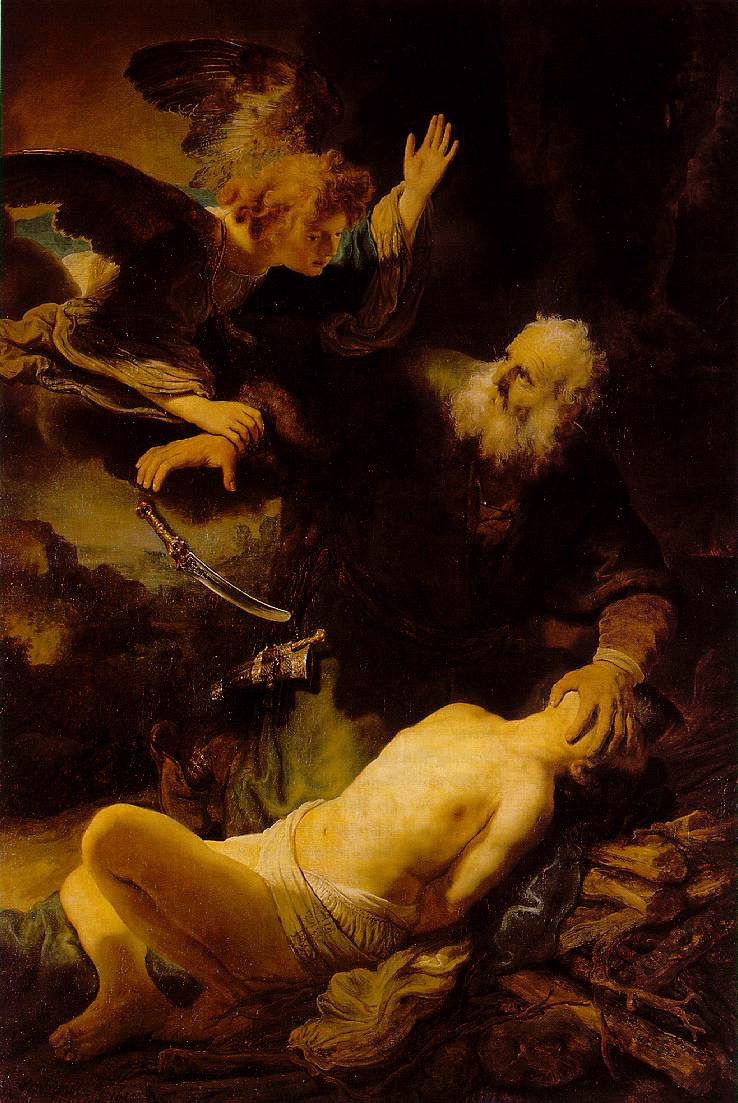
Genesis 22 - Part 2


In Part I we went through the first 2 verses of Genesis 22 and so I want to pick up on Genesis 22:3.


Genesis 22:3

So Abraham rose early in the morning and saddled his donkey, and took two of his young men with him and Isaac his son; and he split wood for the burnt offering, and arose and went to the place of which God had told him.

Most people skip over this verse, when pertaining to Christ, but I want us to notice that Abraham was the one who split the wood for the burnt offering. He was the one who “created” the altar. He was the one who was providing the way his son was to die. Just as, God made the seed that made the tree That made the cross that saved me. (taken from a song from Caedmon’s Call).

God provided the way for Christ to die, not man. We must understand this and be ready to defend this. The Emergent movement (or more specifically Steve Chalke) would have us believe that this is “cosmic child abuse” for God to have foreordained the cross. But we must understand Peter’s words in his sermon:

this Man, delivered over by the predetermined plan and foreknowledge of God, you nailed to a cross by the hands of godless men and put Him to death.

Acts 2:23

(for a more descriptive illustration of understanding the word "foreknowlege" click here.)

Just as Abraham provided the way of Isaac’s death so God did the same in even a more direct way and creative purpose, being that He is God, in the crucifixion and death of Christ.

Genesis 22:5

Abraham said to his young men, "Stay here with the donkey, and I and the lad will go over there; and we will worship and return to you."

Here is a great gem of the Word of God. We have to notice the small wording and intents of the writer and in this case the one who speaks, Abraham. Notice he says, “I and the lad will go over there, and WE will worship and (WE) will return to you.” (emphasis, and the use of the second “we” mine) Abraham, even though there had been no resurrection to this date, at least recorded in Scripture, believed that Isaac, the promised son, would be resurrected from the dead. He believed that both himself and Isaac would be returning from the altar. You want proof? Take a look:
By faith Abraham, when he was tested, offered up Isaac, and he who had received the promises was offering up his only begotten son;
it was he to whom it was said, "IN ISAAC YOUR DESCENDANTS SHALL BE CALLED." He considered that God is able to raise people even from the dead, from which he also received him back as a type.
Hebrews 11:17-19

We see here the complete faith of Abraham in the resurrection of the dead. Abraham knowing that God said that Isaac was to be the promised son, whom his descendants would be like the sands of the shores and the stars in the sky, trusted God even through death. Abraham knew that God’s plan was higher than his and he turned over his own will to the sovereign will of God.
Just as Christ prayed: “Father, if You are willing, remove this cup from Me, yet not My will, but Yours be done.”
Luke 22:42

May we also trust in the promises of God, even to death, to know that His ways are higher than our ways and His ways cannot be thwarted.
Soli Deo Gloria!

Read More......

Saturday, December 09, 2006

The Power of the Gospel

I have read many apologetics books and I also have taught apologetic classes on defending the faith. As I taught I always made sure that those that were being taught understood that apologetics saves no one: only the power of the Gospel.


We have been falling away from this in our culture mainly because of modernism and postmodernism and it really frustrates me. We start to rely on arguments for the Gospel instead of the Gospel itself.
Look at Paul's words:


And when I came to you, brethren, I did not come with superiority of speech or of wisdom, proclaiming to you the testimony of God. For I determined to know nothing among you except Jesus Christ, and Him crucified. I was with you in weakness and in fear and in much trembling, and my message and my preaching were not in persuasive words of wisdom, but in demonstration of the Spirit and of power, so that your faith would not rest on the wisdom of men, but on the power of God.

1 Corinthians 2:1-5


We know that Paul was very intelligent, and has been called the most intelligent Jew to ever live. He could come up with any persuasive argument of who Christ was and why He was the Messiah, but notice that as he tells us in 1 Corinthians, that he determined to know nothing except Jesus Christ and Him crucified. Why? He says at the end of verse 5 so that their faith would not rest on the wisdom of men, but on the POWER OF GOD. Amazing.

What do we rest on when we speak to the lost? Our intellect, or the power of God? If you have never studied Colossians thoroughly take a look at chapter 2 which is a complete defense of Paul that Christ is our wisdom. Also in 1 Corinthians 1:30 it states...
Christ Jesus, who became to us wisdom from God...

Do we truly believe this, or do we find "good" arguments to try and persuade men into heaven?

Did Paul follow even his own advice? One of my favorite parts of Scripture is when Paul goes to Mars Hill in Acts 17. It states that these men, who were Epicurean and Stoic philosophers didn't believe in resurrection of the dead. What did Paul do? Did he go about evangelizing to them in a different way because they didn't believe in resurrection or did he believe in the power of God?

because He has fixed a day in which He will judge the world in righteousness through a Man whom He has appointed, having furnished proof to all men by raising Him from the dead.”
Now when they heard of the resurrection of the dead, some began to sneer, but others said, “We shall hear you again concerning this.”

So Paul went out of their midst.
But some men joined him and believed, among whom also were Dionysius the Areopagite and a woman named Damaris and others with them.


Acts 17:31-34

Paul knew that faith comes from hearing, and the hearing by the word of Christ. He knew that there was no sense in teaching or preaching anything besides the true Gospel which has power. He knew that he was nothing and God was everything.

I planted, Apollos watered, but God was causing the growth. So then neither the one who plants nor the one who waters is anything, but God who causes the growth.

1 Corinthians 3:6,7

Don't plant anything besides the true seed of the true God. May God be glorified.


Read More......

Friday, December 08, 2006

John Owen Quote


When someone acts weak, negligent, or casual in a duty - performing it carelessly or lifelessly, without any genuine satisfaction, joy, or interest - he has already entered into the spirit that will lead him into trouble. How many we see today who have departed from warmhearted service and have become negligent, careless, and indifferent in their prayer life or in the reading of the Scriptures. For each one who escapes this peril, a hundred others will be ensnared. Then it may be too late to acknowledge, "I neglected private prayer," or "I did not meditat e on God's Word," or "I did not hear what I should have listened to."

Read More......

Sorry for the Confusion


We have been switching to the new Blogger Beta version today and it has been a mess. I am computer illiterate so it has been tough times. Sorry if you have come to the site and not seen much that is new or just confused at the new uglier layout. All will be fixed and also look for the weekend posts as well.

Read More......

Wednesday, December 06, 2006

God Deceives

I was challenged by this question last Sunday and I have been meditating on it ever since. The main idea of this text comes from my pastors message but since I’ve added my own commentary I don’t want to put words in his mouth by quoting him as the author of this concept. I do however not want to falsely claim that I’ve come up with this myself but I affirm the idea. (So pastor if you’re reading this understand that I’m not trying to steal your thunder or misquote you).

I have been troubled with a common theme for the past 10 years. I’ve had great bible training in college and from the pulpit but much of what I have come to embrace as biblical truth is really only man’s explanation. So Rahab didn’t really lie because God doesn’t bless liars. How many passages in scripture are glossed over because they don’t fit our paradigm?

Is it ever right to deceive? Consider the story of Samuel in 1 Sam. 16:1-5. Here’s a summary of the story. First, God tells Samuel: “I am sending you to Jesse of Bethlehem. I have chosen one of his sons to be king” (v1b). Next, Samuel protests: “How can I go? Saul will hear about it and kill me” (v2b). What is God’s response? “Trust Me and obey Me.” Not so. God tells Samuel: “Take a heifer with you and say, 'I have come to sacrifice to the LORD.' Invite Jesse to the sacrifice”
(vv2c-3a).

God agrees with Samuel’s concern: Saul will likely kill Samuel in route to anointing one of Jesse’ sons. So, Samuel should travel with a “heifer.” If anyone asks what he is doing, he is to tell them, according to God’s instructions, “I have come to sacrifice.” Upon arriving in Bethlehem, the people are afraid. They ask, “Have you come in peace.” Following God’s instruction, Samuel says to the Bethlehemites: “I have come to sacrifice to the LORD. Consecrate yourselves and come to the sacrifice with me” (v5b).

God sends Samuel to Bethlehem to do what? Yet, if Saul hears about Samuel’s intent, he will kill Samuel. And, if the people are told why Samuel is there, they will likely prevent him from entering the city.

Thus, God tells Samuel to go to Bethlehem under the cover of “sacrificing to the Lord.” That way Saul will leave him alone and the people will allow him to enter the city. God’s plan works. Once the people, including Jesse and his family, have been consecrated to offer a sacrifice, Samuel springs into action. Revealing his true reason for being there. Namely, to anoint one of Jesse’s sons to be King of Israel.
Samuel did offer a sacrifice. But did he deceive the people? Did God tell him to deceive the people?

Imagine going to the store to buy a gun and when the wife asks where you’re going you say to buy bread. Now when you go to the store you intent and purpose is to buy the gun, whenever anyone asks where you’re going or what are you doing you can say, “I’m going to buy some bread.” While at the store you buy the gun and pick up some bread on the way out. You didn’t lie when you stated that you were going to buy bread but that was not the reason for your trip to the store.

This is not the only time we see a biblical account of misleading.

In Ex. 1:15-21. This story ends: “So God was kind to the midwives and the people increased and became even more numerous. And because the midwives feared God, he gave them families of their own” (vv20-21). They did fear God. They did disobey Pharaoh. But they also lied when the explained to Pharaoh, “Hebrew women are not like Egyptian women; they are vigorous and
give birth before the midwives arrive” (v19).

And again we see God showing favor to a ruse in the story of Rahab and the spies.

Joshua 2:1-15. Rahab hid the spies of Israel and lied about their
whereabouts. When a route for escape became available, she led them out another way from that of the pursuing soldiers. Rahab is praised by two New Testament writers for her actions: "By faith Rahab the harlot did not perish along with those who were disobedient, after she had welcomed the spies in peace" (Heb. 11:31). Rahab is listed with Abraham as one whose faith was reflected in her works: "And in the same way [as Abraham] was not Rahab the harlot also justified by works, when she received the messengers and sent them out by another way?" (James 2:25). By sending the spies out by another
way, she subverted the king's desire to capture the spies. God commended Rahab for deception.

There is another point that is often missed in this story about Rahab's lie. "Joshua the son of Nun sent two men as spies secretly from Shittim… (Josh. 2:1). The text continues by telling us that "they went and came into the house of a harlot whose name was Rahab, and lodged there." Did they announce that they were Israelite spies? Joshua says the operation was to be done "secretly," that is, without revealing the truth of their mission. Are not "spies" in the business of lying?

So, is it ever right to deceive others? Or were Samuel, Joshua, and Rahab guilty of moral failure? And what are we to conclude about God’s role in and response to all of those situations?

Over the years I have seen many ways that preachers have tried to avoid these passages. Ironically God does not. Why are we so ashamed when it appears that God does not shy away from these accounts at all? Could it be that we are trying to fit God into a formula that He cannot be put in?

Man always wants to figure everything out. Diligent study is not a bad thing but when we try to be too systematic for our own human understanding we can take away from God’s special uniqueness.

We know that God is good, honest, right, and trustworthy. But God is also mysterious and very unpredictable.

Unpredictable. What does that mean? Does it mean that because we can’t figure out God’s ways that His ways are wrong? Does it mean that we can put restrictions on God and then blame Him when He doesn’t follow our rules? Does it mean that when two opposing views accomplish the sovereign plan of the Almighty that He violated His own standard? May it never be! We cannot predict what God is going to do based upon our false standard of how He will act in every situation.

I suggest that we have it wrong. When we think of terms like crafty, sly, shrewd, misleading, we believe them all to be lies. A ruse or an artful stratagem filled with ingenuity tends to be the way of the Lord and the Lord does not lie.

Take a look at some other unpredictable ways of the Lord. It would appear that a good looking guy like Saul would be a good king then we get the ruddy Dave. Saul seems to be affirmed, by Samuel (God’s man) and Israel. David on the other hand is affirmed by God. God calls Saul to trust in His protection but then He tells Samuel to protect himself in chapter 16 of 1 Samuel.

If there is nothing that changes in the ways of God, nothing surprising, nothing unpredictable then, we will find it difficult to rightly read, interpret and respond to the entire Bible. We will casually explain away divine providential activity that makes us uncomfortable or confuses us like the Egyptian midwives and Rahab. We’ll appear dishonest or ill-equipped when we are challenged by these very clear verses.

If there is nothing unpredictable about God then we will find our faith leaning on and depending on something other than God and Christ

I will need God to provide a single and sure answer for everything
I will need God to satisfy my reason at all times in all matters
I will need God to follow my formula (a+b=c makes sense to me, a+b= x does not make sense)
I will need God to give to me in exchange for what He gets from me

In short, I will need God to be and act domesticated—predictable, controllable, safe. We have a tension because we want God the same all the time. So when we read scripture we become literalists at the point of each passage. Romans 10:9 says confess with your mouth Jesus as Lord and believe in your heart that God raised Him from the dead, you shall be saved. So is that all we need to do? Pray that prayer and you are saved? What about stoning your disobedient children? As difficult as it may be we must address these passages without applying a formula or technique.

God is totally trustworthy and unpredictable. When you don’t understand God’s ways you just don’t understand. Deuteronomy 29:29 is not an escape for difficult questions, it’s an explanation. “The secret things belong to the Lord our God, but the things revealed belong to us and to our sons forever, that we may observe all the words of this law.

Since it is Christmas season think of the term “Immanuel.” Isaiah 7:14 tells us, “Behold a virgin will be with child and bear a son, and she will call His name “God with Us.” Who could have predicted that God, Himself would take the form of a bond-servant and being made in the likeness of men. And being found in the appearance of man, humble Himself by becoming obedient to the point of death, even death on a cross, Phil 2:7-8. Although written about long before it took place nobody predicted it. Some still struggle with this concept. God took the world by storm by being born and then rocked the world even more by dying. Totally unpredictable. In trying to apply a formula to God the Jews totally missed Him.

All this to say that it appears God uses a clever artifice to mislead and deceive the Bethlehemites in order to accomplish His purpose which would be the forerunner to Christ in the anointing of David.

Read More......

Genesis 22 - Part I


I am going to take an opportunity to take a series and devote it to the study of Genesis 22 and the foreshadowing of Christ and His crucifixion. This passage has been broken down numerous times and by numerous men of God. I don’t pretend that this work is my own, as how could it be with all the sermons I have heard from it. But, I also will not have footnotes unless I directly quote someone as, although I have heard many sermons on the subject, I don’t remember exactly where I heard many of the illustrations and comparisons, so please bear with me and forgive me ahead of time. I will say that I did hear a great sermon by Adrian Rogers on the subject about 2 years ago. As I am also very jealous of Adrian now that he is worshiping our God “face to face” in heaven.

On with the show…


Genesis 22:1
Now it came about after these things, that God tested Abraham, and said to him, "Abraham!" And he said, "Here I am."

Here we see the very first illustration I want to make. For most of the passage we will see that Abraham “plays the part” of God the Father and Isaac “plays the part” of Christ but the first verse actually reminds me of what Christ might have said. There was a time in eternity past where the plan of redemption was made (Acts 2:23). We don’t even pretend to understand how this took place or in what capacity but we do know that God the Father and God the Son predetermined the plan of salvation. We also see that it wasn’t just God who predetermined this plan but Christ had his part and He said “Here I am,” like we see Abraham doing here in verse 1 of Genesis 22. Of Christ, we see this in Philippians 2:6 which says that: although He (Christ) existed in the form of God, did not regard equality with God a thing to be grasped. I am not going to defend the great kenosis passage at this point but just notice that it was Christ who did not regard equality with God, not God the Father. As you read further in Philippians you will notice that all the actions that are taken of Christ coming to us on earth it is by Christ's power and no one else’s. ( i.e. He emptied Himself, He took the form, He humbled Himself, etc.) Know that these comparisons are never perfect in our minds so I don’t believe that God “tested” Christ in this plan as is said to be done with Abraham. But, even our thoughts on God testing Abraham makes us first think that God didn’t know how Abraham would respond when we know that God preordains all things as David shows in Psalm 139.

Genesis 22:2
He said, "Take now your son, your only son, whom you love, Isaac, and go to the land of Moriah, and offer him there as a burnt offering on one of the mountains of which I will tell you.


Notice here that God says to take your only son. Interesting to note here is that Abraham had another son, Ishmael, but he was not the promised son that God’s plan ordained. So God calls Isaac Abraham’s only son. With Christ, we know that Christ is called the firstborn (Col 1:15) and God’s only begotten Son (John 3:16), and this passage shows us a little more on what these references truly mean. The calling of Isaac being Abraham’s only son really shows Isaac’s importance or preeminence not his actuality of being Abraham’s only son. Same is seen in Christ. Christ is not actually created nor was He begotten the way that we as humans would think, but both Christ being the firstborn and him being begotten are Christ’s preeminence and His uniqueness. Just as Isaac was preeminent and unique compared to his brother Ishmael.

Two other quick notes on this verse: this is the first time the word “love” is used in the Bible, showing again the importance of this relationship of Abraham the father and Isaac the son. Also, Moriah is thought to be about the region that Christ was crucified on Calvary as Moriah is traditionally thought to be Jerusalem.

As you can see just through two verses, and much more could have been gleaned from these two verses for thought and devotion but I just want to start your study in this wonderful passage of obedience and foreshadowing of our great and glorious Saviour.

Much more will come and I pray that we will always be looking for Christ in the Scriptures as He is our hope and our cause for living.

Read More......

Tuesday, December 05, 2006

Benny Hinn's New Jet!

Check this out from James White's blog.

Benny needs a new ride!

Read More......

Monday, December 04, 2006

Forget about the fish


Heading into chapter 2 of Jonah, we see the prayer of a man finally broken by the hand of the Lord through discipline. Verse 17 of chapter 1, however, tends to make people focus on the wrong thing. Yes, it is amazing that this prophet was swallowed by a fish, and was preserved in the stomach for three days and three nights. But remember the more important truths of (near context) God's desire to save Nineveh and (far context) Jonah being a type of Christ.

Matt 12:39
"An evil and adulterous generation craves for a sign; and yet no sign will be given to it but the sign of Jonah the prophet."

Notice that the sign is not the fish. The sign is not, primarily, that Jonah was in the fish. The sign is Jonah himself. He is a type, or foreshadowing of Christ's work. Jesus continues in vs 40:

"for just as JONAH WAS THREE DAYS AND THREE NIGHTS IN THE BELLY OF THE SEA MONSTER, so will the Son of Man be three days and three nights in the heart of the earth. "

The correlation is this; Jonah was swallowed and contained for three days and night. He then re-emerged to preach. Jesus, in a much greater fulfillment of the sign, did precisely the same thing! Praise the Father for sending His triumphant Son!

There is much to say about chapter two, but here are a couple of interesting truths. It is likely that Jonah does not realize that he has been swallowed by a fish until verse 10, when he is vomited onto the dry land. Besides the fact that we have the benefit of revelation, and we are so familiar with account (and Jonah could not have imagined this scenario), the description Jonah himself offers of his experience in chapter two is one of chaos. He uses terms such as "sheol" (vs 2), death (vs 5), the bars of the earth were "around (him) forever" and "pit (vs 6). It appears that he believes that he is experiencing death. The unsettling churching of the sea, the tangling of the seaweed is suddenly replaced by total darkness and (in all likelihood) suffocating confinement. No one alive knows what the process of death is like (except for the few rare exceptions in Scripture, including Christ Himself), but even then this information has never been shared (as a tangent, it is interesting to note that we never hear from Lazarus' own words after he is raised. The Holy Spirit held back information about his amazing experience. But I digress).

More notably however, Jonah does not mention a fish in his prayer. Further proof that he does not realize what is happening. And, back to our original premise of a man who has finally been broken, it is shocking that he does not offer any supplication in these 8 verses. Some have argued that it is at this point that Jonah repents. But I would strongly disagree. True biblical repentance does not need to be repeated. And even though sincere believers do falter in their ongoing repentance, Jonah displays his most extreme blasphemy in chapter 4. This indicates that even though here in chapter two he is frightened and humbled, he is not demonstrating repentance. But God, in His merciful way, breaks Jonah and brings him to the place of a correct perspective on what he has been called to do:

2:8-9
Those who regard vain idols forsake their faithfulness, but I will sacrifice to You with the voice of thanksgiving. That which I have vowed I will pay. Salvation is from the LORD."

In other words, Nineveh, who has regarded vain idols has so far been cut off from faithfulness (or better translated mercy, kindness or pity). The only source of mercy is from the true God, YHWH. Judgment is coming, but mercy is being offered one last time. As a prophet, he has vowed that he will speak what YHWH speaks. He is now ready to pay that vow. And he will no longer try to manipulate who receives salvation. "Salvation is from the LORD". The LORD will save whom He will save!

At this point, God commands the fish and Jonah is delivered.

Read More......

Sunday, December 03, 2006

Edwards' Resolutions 61-70


Contend Earnestly uses our weekend posts to quote men of the faith that have been a great encouragement to church. This is the last installment of Edwards' resolutions. As a fellow blogger agreed, these resolutions have been convicting, and have served to raise our standard of thinking regarding a godly perspective on life. Now the challenge will be to find another great author to plagiarize next weekend.

For a full reading of the Resolutions, click here.

RESOLUTIONS 61-70
of Jonathan Edwards

BEING SENSIBLE THAT I AM UNABLE TO DO ANYTHING WITHOUT GOD'S HELP, I DO HUMBLY ENTREAT HIM BY HIS GRACE TO ENABLE ME TO KEEP THESE RESOLUTIONS, SO FAR AS THEY ARE AGREEABLE TO HIS WILL, FOR CHRIST'S SAKE.

Remember to read over these Resolutions once a week.


61. Resolved, that I will not give way to that listlessness which I find unbends and relaxes my mind from being fully and fixedly set on religion, whatever excuse I may have for it - that what my listlessness inclines me to do, is best to be done, etc. May 21, and July 13, 1723.

62. Resolved, never to do anything but duty, and then according to Ephesians 6:6-8, to do it willingly and cheerfully as unto the Lord, and not to man:‹knowing that whatever good thing any man doth, the same shall he receive of the Lord.Š June 25 and July 13, 1723.

63. On the supposition, that there never was to be but one individual in the world, at any one time, who was properly a complete Christian, in all respects of a right stamp, having Christianity always shining in its true luster, and appearing excellent and lovely, from whatever part and under whatever character viewed: Resolved, to act just as I would do, if I strove with all my might to be that one, who should live in my time. January 14 and July 13, 1723.

64. Resolved, when I find those "groanings which cannot be uttered" (Romans 8:26), of which the Apostle speaks, and those "breakings of soul for the longing it hath," of which the Psalmist speaks, Psalm 119:20, that I will promote them to the utmost of my power, and that I will not be weary of earnestly endeavoring to vent my desires, nor of the repetitions of such earnestness. July 23, and August 10, 1723.

65. Resolved, very much to exercise myself in this, all my life long, viz. with the greatest openness, of which I am capable of, to declare my ways to God, and lay open my soul to him: all my sins, temptations, difficulties, sorrows, fears, hopes, desires, and every thing, and every circumstance; according to Dr. Manton' s 27th Sermon on Psalm 119. July 26, and Aug.10 1723.

66. Resolved, that I will endeavor always to keep a benign aspect, and air of acting and speaking in all places, and in all companies, except it should so happen that duty requires otherwise.

67. Resolved, after afflictions, to inquire, what I am the better for them, what am I the better for them, and what I might have got by them.

68. Resolved, to confess frankly to myself all that which I find in myself, either infirmity or sin; and, if it be what concerns religion, also to confess the whole case to God, and implore needed help. July 23, and August 10, 1723.

69. Resolved, always to do that, which I shall wish I had done when I see others do it. August 11, 1723.

70. Let there be something of benevolence, in all that I speak. August 17, 1723.

Read More......
Related Posts with Thumbnails